Basil tries palm skin a cat
"Never neglect the garbage cans" - that's the wisdom that cat Basil understood from time immemorial. These containers brought him more information than a dozen informants from among the top managers of local companies. So it was at this time ... Basil morning climbed to the Internet in search of fresh news and programs for your brand new Palm Vx (looking into his cat for a long time, bought a month ago and now an enthusiastic neophyte amused favorite toy, until it topped the charts handy utility for the calculation of biorhythms cat ). The first thing he saw on the Web, has news about the development of a set of "software, literature and accessories to facilitate the Russian buyer acquaintance and work with the Pocket PC platform Palm OS". "Finally - he thought - someone guessed." Suspicion crept into his soul when he saw that in addition to other software bundled for $ 30 offers a package CyrHack - popular, and is absolutely free, crack Palm. Fluffy seeker gossip thought, but then read the title of "the new product, Mobility Research" company-developer: drive called "Russian Palm" ... Basil tensed, sensing an exhilarating scent of game - gave tidbits that some time ago (just exploring the containers with papers thrown in the back of a city near Moscow), he stumbled on scraps of correspondence with the mention of the same name but with different actors. "It is true that decent cats in dumpsters not climb, they prefer burning fireplace, rest and a glass of brandy - philosophizing at the time, Vaska, digging in the contents of the next tank - but, alas, interesting gossip while lying by the fire will not catch." And he bravely immersed himself in another capacity. As I understood a tireless seeker gossip, examining the surviving pieces (firm, use a shredder!), It was about trying to create the program "Russian Palm OS", in that the developer and request the highest resolution at Palm, Inc. "Can we know the opinion of Palm, Inc. The legality of using the name" Russian Palm OS "for our package? Can we count on the official permission to use this name?" "Hmm - thought then Cat, aware of the reverent attitude Palm, Inc. To own the brand - to the guys in Santa Clara that's just to share the word Palm, it should happen that something quite extraordinary ... For example, earthquake in the heart of Silicon Valley, or where shares drop Palm "rapid jack and hysteria Pocket PC ... Since neither one nor the other has not yet been observed in cat, as there is a very astute, in general, assumed that read at the next scrap of, but by professional habit to get out in no hurry. Otpihnuv empty bottle of whiskey and running both legs in a pile of cans and plastic cups, as a reward for patience, he fished out a new piece, which means (hereinafter translate Kota): "You have no right call their product "Russian Palm OS". Note that Palm, Inc. does not allow independent software developers the right to use the trademark PALM and its inclusion in the name of their software products. "Next illegible, only visible position:" Counsel Palm, Inc. on the use of trademarks (Palm's trademark attorney) ". Shred number three told the opinion of a Product Manager (Cote guessed that struck such insolence Management Palm long and vigorously argued about this mysterious Russian soul, which is not batting an eye raised her hand to the holy of holies - - trademark ")." We are in no way can allow you to use the words "Russian Palm" as the title of your product. This is misdirecting potential buyers who think that becoming a product created and manufactured by Palm. We are talking about your product, and you have to think for him the original name. "" I wonder - he asked himself Kitten, again looking at pieces of correspondence and making sure that nothing interesting in that he once missed - a software package which is say, as far as I know, has not appeared. Interestingly, knows whether Palm, Inc. a new "Russian Palm"? ". the question, he continued to delve into the news." ... Microsoft changed the conditions of technical support. ""Well, well - thought Basil - straight-away, at the request of the working people ..." The real reason for change, he realized even at a reception on the occasion of this event, sponsored by the Russian representative office of the corporation. Looking for solid and confident managers, Cote thinking about problems that are inevitable for any representation. Actually, they are usually two - sales and accounting. At first he thought that the point here is simple savings, no support, no engineers, but when I heard that employees remain in their jobs and begin filling the Russian version of the database Microsoft Knowledge Base, Cote realized that the original idea of "insurance for five fracture "was born quite different: apparently, someone in the company Microsoft bothered to waste money on responses to customers, much less that the report to the Redmond thousands of visitors to Web-site where both simpler than the" customers who are satisfied with the technical support "... But this stuff - a lot more interesting will be when Microsoft will have to sell new versions of Windows and Office, equipped with a system of copy protection. It is assumed that each customer after installation "activate" your copy. Cat listening to the plans and wondering - who makes fun of someone? In his mind there were snow-covered expanse of threes and half-drunk driver, racing in the Microsoft registration forms with applications to activate ... "Um - Basil blinked nervously licked his lips - and that this will be in this new Office, which for him have so suffer? " Article caused quite a lot of noise, the Company MakTsentr promised shortly to give their comments. Sources, Materials:
Cybiko - a toy or a step in the future?
Remember how they sing Alica and Bananan at the eighteenth minute, "Assa" song BG "I'm going to do you? "What's your number?" - With the inimitable kiberintonatsiey asks Bugaev, nicknamed "Africa", and the most - for my taste - a touching Russian actress of the last century Tatiana Drubich answers too cybernetically-neutral and cybernetic-instantly: "Six." "What is your sex?" - "Woman" ... I believe that no BG or Solovyov, who shot "Assou, personal or bad, no assessment at all this kibernetichnostyu not want to say - just showed a rave style. In those days, of course, charming. Equally, as the most - also for my liking - a charming (and quite successful), the representative of the Russian hi-tech-business, David Yang, thinking Cybiko, too, probably, is not primarily about computers (cyber) component was thinking - but a coterie and style.
Therefore, without taking in mind all those tedious arguments about the brain drain, simply set up in Moscow, Spartakovskaya area firm for two hundred people, who must develop software and devices (after the first serving today, the version already comes second, but the features and cut out of foam and a third, and it seems that the fourth), he with two colleagues went to the States, there founded the firm, scored two dozen American managers, and an order for the glands consistent manner posted on Taiwan. And Cybiko go! Maybe still not as fast as wanted David, but, first, Down and Out problem - a beginning, and second, not so rich in the firm of David to buy virtually all the central American newspapers - and their pages with articles about the Cybiko is covered entirely not a small area of the wall in the office on Spartakovskaya, and AOL, no matter how rich the monster was, in the empty case will invest the money is unlikely.
Tak.Omolazhivaem hero "Africa for five years, the heroine Drubich - ten, hand over to them by Cybiko and run the disco. (Optional: at the disco, at the entrance, instead of number plates - each awarded by Cybiko [Maxim Otstavnova idea, expressed in private correspondence].) Scored in every machine data about themselves (their view of themselves, although the hair color or growth is better to give an objective : here you are not Internet-chat, all - on the patch) and (I quote Otstavnova) "10 qualities of the girl of his dreams." The girl (or a few girls) appears, Cybiko squeaks and (or) to vibrate, like your soul - and you have your sending her billet doux. It is your responsibility. Or not responding. If started, but - at the end of disco - I had to get out of range of the interaction of two Cybiko (hundred or so meters) - go to it at its Cybiko (with a unique number that turn with the help of dogs and cybiko.com supplements to the standard e-mail-address) mail from his, perhaps she'll answer ... - What's your number?
 |
 |
By the scruff let in the sun
PC Week in the company MakTsentr "read completely, from cover to cover. Therefore, when he came sixth number, the last page immediately discovered was an article "Basil tries skin" palm "cat." Author's name is not listed, call it for clarity Cat. If we reject kotyachi philosophizing, the article will be three simple and clear thought. First - the project "Russian Palm", recently launched by "MakTsentr" suspicious, because the package is sold for money, although includes some free programs. The second - the very name of the package is doubtful, because someone came up with it before, but failed to get permission Palm, Inc. to use it. The third idea is not so transparent, in my opinion, this is some sort of attack on the Moscow office of Microsoft. The last point we will not comment with your hands, and the first two I would like to discuss. So, what is "Russian Palm"? A set of software, literature and accessories to facilitate Russian buyer acquaintance and work with the Pocket PC platform Palm OS. In "The Russian Palm" includes the following program (version 1.02)
Also,
On the table lies raspotroshenny package "Russian Palm". Everybody is happy and smiling. Without false modesty, but only to reassure the patient kotyachyu conscience can say that the European guidance Palm, Inc.highly appreciated our efforts to localize the product, whose concentration and was a project "Russian Palm". So most likely none of Palm, Inc. will not hesitate to contact us with a lawsuit. To do this, there are other reasons that will interest fans of legal technicalities. Palm trademark was registered in Russia. However, it is not made by Palm, Inc., A certain individual, which is called Dr. Karin Schutz (Dr. Karin Schuttze), back in 1992, when even the "Newton" (device) was not. Register held by the section relating to medical devices, biochemical, laboratory, etc., supplies, and maintenance of such equipment. That is in Russia now claims for unauthorized use of the word Palm can produce only the registered owner of the brand - Dr. Schutz. We have filed a request for registration of the mark "Russian Palm" under the heading "Software for computers." However, the application is likely to be rejected for the following reason. Article 6 of the Law "On Trademarks, Service Marks and Appellations of Origin, states:" shall not be registered trade marks consisting only of symbols that are generally adopted symbols and terms. " A word of Palm in the computer world is that of "common term" and is, not to mention the word "Russian." This is easily seen, for example, by opening the relevant articles of the popular vocabulary Lingua 6.5 ". Thus, we are ready to accept claims from the owner of brands Palm, where they suddenly appear, but this is unlikely, because his interests are not infringed. Hello cats! Discussion of the article in the conference authors, translation:
| Autopilot | A. Belankov |
| Billiards (demo) | Megasoft 2000 |
| BDikti (demo) | Bakes |
| Kodar | A. Kuznetsov |
| CyrHack | Tashpulatov |
| Days | A. Belankov |
| FastCPU (demo) | Megasoft 2000 |
| Beehive | A. Kuznetsov |
| LauncherLight (demo) | Megasoft 2000 |
| Megalauncher (demo) | Megasoft 2000 |
| PaPiRus | Fiztekh-Soft |
| RusGraf | SDG |
| RuSMS | C. Oskin |
| Silkyboard | SoftAVA |
| Tolmach | Fiztekh-Soft |
- On-Screen Keyboard Silkyboard, designed specifically for the project "Russian Palm". With Silkyboard rapidly grown to Palm'e texts can both beginners and experienced users;
- book "Palm OS for the user" in Russian;
- film to protect the screen from scratches;
- Sticker-Help for Russian graffiti stroke.
 |
Psion: through the thorns to the stars
Why Psion (EPOC)? After all, this platform in Russia is traditionally not as common as, for example, Palm, although in Europe, for example, the situation is reversed. But things tend to change, but for the sphere of high technologies, this assertion is especially important. EPOC is rapidly gaining popularity in the telecommunications sector due to its compact size, low system resources, easy adaptation to any type of device and reliability - not for nothing that this operating system drew attention to the major manufacturers of mobile communication equipment. PDA Psion has long been known as a reliable, extremely easy to use and economical device, they are always different from the refined design. Throughout the world, users are paying more attention to these devices - not without reason Psion opens new regional offices in different countries. Even in the U.S., where traditionally the stronghold of Palm, there is a significant increase in demand for Psion. A backlog of Palm in Russia can be explained rather frankly weak promotion of the brand PDAs on the market. I am sure this article will help readers learn more about the interesting world of Psion, and possibly even cause a desire to join him. If this happens, then I'm sure you're unlikely to regret about it, believe my experience. One day, opting for the platform, would not want to use something else. The purpose of this article - do not just give an overview of the model number of Psion, but rather an attempt to make some "inside look" at the possibilities offered by handheld computers (hereafter - CCP) from the pioneer of this trend - the British company Psion PLC. We begin with a brief excursion into history. Psion PLC originally conceived creator - David Potter (David Potter) - as a company, a software developer. And indeed, his first steps (starting with the base year - 1980) Psion made in this direction - was developing computer games for the once popular in our country, Sinclair ZX81 (more known as Spectrum), and quite successfully. Having made a name for himself in the computer world and the initial capital of Skopje, the company began to enter other markets, then virtually unknown. It is necessary to pay tribute to the sagacity Potter - he could see then what was obviously not for everybody but still features the then the electronics industry and technology were not allowed to talk about too much of miniaturization. However, many electronics manufacturers, for example, Sharp, have already started production of programmable calculators and even a sort of microcomputers with built-in BASIC interpreters.
Yet the first "real" PDA is launched in 1982, Psion Organizer. From the standpoint of modern man, accustomed to the wonders of technology, this device was extremely primitive: a one-line LCD screen, 2KB of RAM, a processor with a clock frequency of approximately 1 MHz. However, the Organizer has been an important feature: it was not just a calculator, and in some measure a personal information device - it was built simple notebook and a clock. The device also had the opportunity to expand: two slots for special cartridges with additional memory, or even RS-232 port! The device was equipped with 37-key alphanumeric keyboard, there was strong body and a sliding cover that protects the keyboard. Dimensions and weight of the device at that time were also at the level ": 142h78h29, 3 mm, 225 g. At the cartridges supplied with different utilities, including programs for financial and scientific calculations. The device was popular, for it was a large number of application software. This is also one of the important features of the Organizer: for him it was possible to create your own software, which attracted a large number of developers.
In 1984, a model Organizer II, incidentally, is still producing (albeit under the order). Produced modifications to the increased RAM, specialized versions to work as shop terminals, etc. The device is widely used as a data collection terminals in trade and industry (the good, extremely durable and reliable design that helped). Organizer II is still used by many users precisely because of its legendary strength. It is the use of these devices in the industry gave impetus to the emergence of industrial PDAs.
In 1984 he was released on a specialized industrial computer HC. He had a 80C86 processor with a clock speed of 3.84 MHz, 256KB ROM, the screen is 160x80 pixels with backlight. Modifications differ mainly in RAM (128Kb in the base model). Used for expansion slots for drives SSD (Solid State Disk, of solid discs) - "branded wheels" Psion. Also in the HC the prototype operating system, in what has become a sort of bestseller - SIBO (Sixteen-Bit Organizer). However, instead of a graphical interface used DOS-like command line. The file system is compatible with DOS, the ROM has been included language interpreter OPL (Organizer Programming Language), which subsequently created a great piece of software for this platform. Also produces a large number of accessories - docks, special portable printers, scanners, etc. Subsequently, the concept of HC has found a new incarnation of modern industrial terminals WorkAbout.
But Psion did not think limited handheld devices - and as it turned out, in vain. Somewhere in the early 90's the company attempted to enter the market such as notebook computers (or, as they said, laptops). Published a series of MC: MC200/400/600/WORD. Despite the fact that for the time these devices were mounted technology and design idea (touch pad, graphical user interface, great battery life), a series of MC was the biggest failure Psion - affected unnecessarily overpriced.
But life goes on. Not everyone needs industrial terminals. And Psion draws attention to the needs of ordinary people. In 1991 he produced the first model of the "third" series, subsequently became a bestseller: Series 3 'Classic'. This model was released in 1991 and for several years has defined the look and functionality of computers Psion. The original folding case design, 128 or 256 KB of memory, big enough and comfortable keyboard, a fully graphical user interface (though only controlled from the keyboard), multi-tasking. Was used 80C86-compatible processor NEC V30H with frequency 3.84 MHz. In the ROM was "stitched" nice set of applications - diary, word processor, spreadsheet, simple single-table database, a programming language OPL, reference base in the cities of the world and the world clock, calculator, etc. Software quality of the whole "third series was just incredible - the system was literally licked to a shine. For all the time its existence was not detected in any substantive errors. The operating system used in these PDA, called SIBO (SIxteen Bit Organizer - 16-bit organizer).Good development tools and familiar to most programmers architecture 80h86 did their job - the number of programs for these devices has been growing like a snowball).
In 1993 he released Model Series 3a. From its predecessor, features a large screen size (480h160 points), increased memory (from 256 to 2 Mb in the latest versions), double (7,68 MHz) processor, built-in spell checker and even a card game of "patience." Also been set up only to date hardware Russified model - Series 3aR. It was possible to expand the memory by removable disk SSD. There was a serial port, however, unusual. To connect to a desktop PC requires a special cable.
The branch also developed industrial terminals. Its final incarnation was WorkAbout - a real workhorse, extremely reliable and robust computer. Due to the special extensions (bar-code scanners, radio modems, etc.) adapts to any production needs, such as inventory control, etc. In Russia, the terminal WorkAbout even "armed with" a unit of the traffic police. Specifically for these devices has been created among the accelerated development of applications - OVAL (Object-based Visual Application Language), is compatible with Visual Basic. In 1996 he released Model Series 3c. Speed serial port (now a "normal" RS-232) was increased from 19200 to 57600, was attended by an infrared port (but again non-standard) lighting. Memory size 1 or 2 MB.
In the same 1996 Psion went to another segment of the market handheld devices and presented Siena - a sort of "lite" version of the Series 3 for those who need no PDA, but rather a powerful organizer. The screen has been reduced by half, the size and weight of the device have also been considerably reduced - it can be easily put in your shirt pocket. Suite of applications has not changed. Unfortunately, the inherent Psion innovative approach to design housing for all their devices (and each model features some kind of "pearl" in the design) played a better role: Siena was not too strong - especially frequent were broken hinge housing. And the price was not, alas, a little (unfortunately, this kind of "fad" Psion - the price of their devices are kept high, but most likely due to the fact that primary production is placed in England, where the cost of its very large).
A year later (in 1997), the final accord, "the third series was released model Series 3mx - with a clock speed of 27,684 MHz and a serial port speed 115200. It turned out that the release of this model coincided with the transition Psion to an entirely new architecture and with the release of the first model in the series - Series 5, Series 3mx why sales were low. At this "Third Series" has ceased development and is currently almost no support Psion. However, these PDAs created a huge number of applications of different properties (alas, most of them do not Russified).But stop our historical digression for a moment and try to understand what determined the success of SIBO (during the existence of a "third series has sold several million units). First, as noted earlier, this is extremely attractive design - any device from Psion nice pick up. Secondly, it is perfectly designed and implemented an operating system, in which all left to chance. Third, a great set of applications on almost all occasions:
It was a real revolution in the world of PDAs. Convenient and relatively large keyboard, good screen 640x240 pixels, 32-bit ARM processor 7100, 4/8Mb memory slot for Compact-flash, which became by the time the industry standard, IRDA-compliant infrared port, serial port RS-232 touchscreen screen and the new OS with an excellent set of firmware, the original design with the "moving out" keyboard - all contributed to the fact that demand for the Series 5 was very high during 1997-1998. True, very quickly became clear that the design (or rather type) devices are very fragile (most often broke the loop connecting the halves of the device), is pleasant to the touch rubber coating has a strong tendency peel, giving the device obsharpanny view, the screen is quite easy to break, and stylus ( Pen-Pointer) has a habit of getting stuck because of the distortions case. Subsequently, the situation has improved - the body became stronger, the coating does not peel so much. Still, "the first attempt" was a bit lumpy. Nevertheless, the new system had good success. And thanks to the new OS from the start conceived as easily portable and versatile system for personal information devices of various types, it has become seriously interested luminaries telecommunications market - Nokia, Ericsson.All this has led to what is in the same 1997-based Psion Software has created a new public company Symbian - the brainchild of Psion, Nokia, Ericsson and Motorola, whose main objective was the development and licensing EPOC manufacturers of telecommunications equipment. Later Symbian joined Matsushita (better known under the brand name Panasonic), IBM, Sybase. Plans for Symbian far-reaching, but rest on your laurels is early - the competitors (in particular the notorious Microsoft) are not asleep. The market of mobile technology is so appealing and promises such profits, that fight for this tidbit turned serious. In addition to Psion, EPOC-based devices also announced Ericsson and Motorola. In particular, this year, Ericsson has launched R380s - a hybrid cell phone and organizer, a so-called smartphone. The device can operate as an ordinary cell phone and a PDA - with its help, for example, can read email, browse WAP-page, etc. But back to the Psion. After the release of Series 5 has come a standstill. While major competitors Psion released more and more new models, Psion itself in no hurry to please us with new products. And only after two (!), In 1999, finally began to appear the rumors about the new model. And here in the summer of 1999, the public was presented model Series 5mx. Despite the fact that superficially it differed only in color shell filling has undergone very significant changes.
Series 5mx equipped ARM710T processor with a clock frequency of 36.864 MHz (twice more than the Series 5), significantly improved screen, 16MB of memory and a new version of the EPOC (Release 5). The last item is perhaps the most important novelty: for elapsed since the previous version (EPOC Release 3), the system has undergone substantial revision. Highly optimized code that is added (and integrated into the operating system) tools to work with e-mail, faxes, cell phones, support for WAP, appeared a full Web-browser and a virtual Java-machine - in other words, the system has reached a qualitatively new level. Embedded applications have also undergone some changes, for ease of synchronization with desktop PC, a special base Contacts. Performance of the new system also significantly improved (compared with the previous version is 2-4 times only by optimizing the code). In combination with a faster processor overall performance CCP increased by 3-5 times. For the German market was released model Psion 5mxPRO, in which there is no ROM, and the operating system is loaded into memory cards Compact-flash, which allows to upgrade the system. In the same year Ericsson has released a MC-218, is essentially a clone of the Series 5mx with a different color casing and slightly augmented set of applications - there was a special application for adjustment of cell phones, software for creating and sending e-cards and WAP-browser. The kit also supplied infrared modem for cell phones Ericsson. Unfortunately, Ericsson is not very actively promoting this product, so its sales were not as great as in Series 5mx. The new model was a huge success. In the same 1999 Psion introduced two new items:
REVO - tiny and very nice computer for speed equivalent to the Series 5mx, but with less memory (8MB) and no expansion slots. Connecting to a PC - via a docking station rather than through a special cable, like the Series 5.Set of applications the same, plus there were special application to work with cell phones. In 2000, released an updated version of REVO Plus with 16MB memory.
Series 7 - the computer can not be called a pocket, but rather a sub-notebook. Color screen 640x480 pixels, 133-MHz processor StrongARM, 16MB memory (expandable to 32MB), slots Compact-flash and PC-Card (PCMCIA). Was also released production version - netBook, feature twice the amount of memory, a faster 190-MHz processor and a lack of memory (as in Series 5mxPRO), and 4Mbit / s infrared port. What we offer Psion computers today? As usual, this full set of modern office applications:
 |
 |
 |
 |
 |
 |
 |
 |
 |
 |
- Word text editor with features of text formatting (fonts, spacing, spelling, etc.);
- Spreadsheet Sheet - a fully featured table, not much inferior to their desktop counterparts (though not multipage);
- simple single-table database Data;
- amazing diary Agenda - still considered the best among all similar programs;
- alarm clock;
- base, "World Time" World - information about the large number of countries and cities in the world with telephone codes, offset to UTC, etc.;
- programming language OPL - a powerful BASIC-like language, which produced most of the applications for SIBO;
- powerful calculator Calc;
- Jotter pad for taking notes;
- digital audio recording software Record.
 |
 |
 |
 |
 |
- powerful text editor Word with great possibilities of text formatting, styles, templates, spell checker, the ability to insert pictures, tables and other objects;
- Spreadsheet Sheet, however, unfortunately, still not Multipage;
- program digital recording Record (Series 5/5mx can also be used as a voice recorder, without revealing - for the housing there is a special button);
- graphics editor Sketch, roughly similar in features Microsoft Paint - there is always the possibility of something quickly to sketch or write (you can, for example, to insert your signature in a document Word);
- diary Agenda - the best for today; Agenda will not give sleep in the morning, remind you of birthdays girlfriend or wedding day, let you know what kind of things planned for today, will help to distribute the time - in general, indispensable thing for those who do not much trust their own memory ;
- World Clock Time - information on major cities and countries around the world, time zones, the distance between cities, sunsets and sunrises, the location of settlements and much more;
- Notepad Jotter - take notes as in a regular paper notebook, with the ability to quickly search and editing;
- Database Data - to store a wealth of information. Up to 256 fields of any type (text / number / date, etc.), the ability to insert graphics into text fields, any field names. As an option - Address Book;
- Terminal Comms - a simple terminal program that supports the Terminal ANSI, VT-42 and VT-100 (for example, for remote administration), exchange files with other computers on the old X-modem protocols and Y-modem;
- powerful calculator Calc;
- Email Client Email - access to email, SMS and fax;
- Base Contacts - to store information about all the friends and acquaintances with the ability to exchange data with popular desktop applications like Microsoft Outlook;
- programming language OPL, although not as powerful as in SIBO, but enough to write simple programs. Translator and editor built into the PDA, so application development can be carried out on the device itself;
Batteries
Take a look at your cell phone, PDA or laptop: due to the rapid technological advances have become widely available devices, which have ten or fifteen years can be seen only in science fiction films. And among this riotous color blooming high-tech industry is a perfect anachronism conventional batteries. Just think, the principles that underlie all modern batteries were opened even in the last century, but much earlier. And since they have undergone is not so great changes, which mainly consisted of reducing the size and use of improved materials. It would seem that the world GHz and nanotechnology is the "old" should take a back seat. But with the advent of many modern mobile devices (players, PDAs, cameras and camcorders, laptops, etc) we are witnessing the opposite tendency - the batteries and the batteries are not less important part than the processors. It all depends precisely on the capacity of the power source. And without it, even the most feature-rich gadgets will be absolutely useless. In fact, such a solid age of technology - it's a good thing. Over this period, scientists and researchers have studied the problem in detail. Modern "duraselly" far removed from the battery Volts two centuries ago. And now, manufacturers are spending big money to improve the parameters of their products and reduce their size. A motor of this process is a constant striving toward miniaturization of electronics manufacturers. All the latest developments in this area are trying to meet the needs of modern mobile technology. The fact that they even work in new ways, is not so, as radios or flashlights. All of these digital cameras, PDAs, and CD-MD-MMC-MP3-players need batteries that can withstand sudden surges that occur during power screens, unwinding discs, and out of hibernation. In contrast, computer companies, holy chtyaschih Moore's law, the firms producing the batteries, have no illusions about the nearest (and even not so) future. Previous decades (!) Taught them not to wait for the miraculous emergence of new technologies that will increase the battery capacity in half. On the contrary, we must work hard, gradually improving available. Suffice it to say that over ten years of lithium-polymer battery life of this technology has not been fully exhausted, and therefore the best minds of the industry continues on the percentage by half a percentage point increase in their specific capacity. Batteries have come a long way of development, but they still are not enough to serve people. Next, we'll tell you about the history of batteries, as well as try to understand what lies ahead. Well, to begin with a look at how they work and what they have inside. Batteries - are devices that store energy, which they then give that same energy-consuming device. However, under this definition includes as flywheels or, say, the clock spring. Unfortunately, at this point in the Russian market clockwork models of cellular phones or PDAs are not represented at all, so we leave this interesting topic to better times. Omit also the story about the lead-acid batteries - despite the fact that they have a huge capacity, mobility (not to be confused with the car) leaves much to be desired. What we usually mean by the word "battery" can be described as follows: an isolated system in which chemical processes occur, resulting in the generated electric power. The emergence of portable computers, as well as many other mobile "stuff", gave a new impetus to the development of autonomous power supply technologies. If you look at conventional computers, they are fed from the network, and therefore practically do not use batteries. As an exception can be called a CMOS-battery on the motherboard, batteries, uninterruptible power supply (UPS'ov), and, on the little things, "fingers" that are inserted into various wireless mice, keyboards, etc. How different mobile devices: there is not even argue about anything, it is difficult to name even one, which would not have stood a battery (or battery). In addition, when all the variety of shapes and sizes, by and large, they all use virtually the same batteries. That is to say, and a mobile phone and a laptop equipped with the same Li-Ion-batteries, although the shape and the capacity to compare them is difficult.At the same time, the concept of all batteries manufactured for mass consumption is virtually the same. Two electrodes - a cathode and anode - are made of two different metals (strictly speaking, they should have different degrees of oxidation). The space between them completed by a third material called an electrolyte. Wide choice of components allows you to create a unified scheme are many types of batteries that are sometimes diametrically opposed properties, different specific capacity (ratio of maximum battery to its volume) and the nominal voltage.
Other experimenters have noticed the results. They have improved the Voltaic pile, creating new types of batteries. For example, in 1836 the English chemist John Daniell put copper and zinc electrodes in a container of sulfuric acid. This battery is called "planar element" or "element of Daniel." Three years later, another Englishman, William R. Grove, Oxidizer added to prevent hydrogen accumulation near the cathode, which reduces the voltage at the output. There were other attempts to improve the original design, but none of these primitive devices are not used nowadays. The first significant breakthrough was made Frenchman Gaston Plante. In 1859 he spent an interesting experience, outwardly similar to that done Volta. In his galvanic cells were used as electrodes for lead plates and electrolyte is dilute sulfuric acid. Plante connected to elements of the DC, and some time to charge the battery. The instrument itself was generating electricity, producing almost all the energy spent on exercises. And it can be recharged many times. That is exactly what appeared the same lead-acid battery that it will still be used in all cars produced. Another device is a long-liver has been developed and patented by another French inventor, Georges Leklanshe in 1866. Named in honor of his element served as the prototype of the modern "dry" batteries, although initially it was such a name did not match. The fact that in the version proposed Leklanshe, the electrolyte was a liquid. At the same now manufactured batteries has been replaced by jelly to prevent leakage of the contents and damage to equipment that feeds the battery. In the rest, during which time technology has changed little. As a half-century ago, Dry elements are zinc cup (anode), which is inserted into a graphite rod (cathode) and the inner space is filled with electrolyte. Using this technology produce the cheapest and massive power supplies, which are inserted into a flashlight, players, toys, etc.However, in its original "wet" form elements Leklanshe were neither compact nor reliable. Therefore, many innovators have tried many times to improve its consumer qualities, such as placing in airtight containers, not allowing leakage.
Most modern batteries: nickel cadmium, nickel metal hydride and lithium all - were developed as early as the 20th century in the laboratories of large companies or universities. New chemical systems are not invented by individual fans, based on their own intuition. Basic principles which underpin the functioning of cells, already thoroughly studied and described the exact formulas. Today the main problem facing developers is the selection of optimal components. Chemists distinguish between galvanic cells of two kinds: the first and second. The difference between them lies in how to produce the energy they produce. Elements of the first kind - is disposable batteries, which produce electricity through chemical reactions that result in anode, cathode and electrolyte undergo irreversible changes. This makes recharging of such batteries is impossible or very irrational (for example, to charge certain types of batteries have to spend ten times more energy than they save, while other species may accumulate only a small fraction of its original charge.) After that, the battery will only have to throw in the dustbin, where, hopefully, it gets into recycling and most likely to landfill. Elements of the second kind is more often called batteries. This means that they can be charged if the electrodes to connect the DC source. Chemical reactions occurring in them, are reversible. Thus, the batteries of the second kind do not produce, but only save energy. Other things being equal, the batteries seem to be the best choice compared to disposable batteries. Using them, we do not do as much harm to the environment, because after the discharge, they should not be thrown away. One battery can be used for about a year, while conventional batteries for the same period would need 100-200 pieces, and each element contains toxic substances. But it is not so simple. In fact, the batteries have some serious shortcomings, which do not allow them to displace all other batteries. In urgent cases, disposable batteries are the best choice. They are cheap and always ready to go. But for mobile devices that are used regularly, batteries remain the most profitable option. None of the battery can not store energy forever. Chemicals inside react with each other and gradually decompose. As a result, reduces battery life. In this progressive relaxation are two main reasons. Some chemical reactions affect the ability to store energy. After some time the battery will lose its entire charge. This time, called the shelf life is usually indicated on her body. It depends on the type and design of the batteries, but the storage conditions also affect the duration of their life. Modern lithium batteries can be stored for more than ten years, at the same time, elements of other types can be discharged in a couple of weeks (for example, zinc-air battery after starting use). But even the "long-running" samples can be rendered unusable sooner if they are stored in adverse conditions. Particularly affects the impact of higher temperatures. If they are, by contrast, cool (and some types even freeze), it often helps to keep them in the best shape at a time much longer than the specified expiration date. Reversible chemical reaction in batteries occur even when not in use. This process is called self-discharge. It is reversible, as well as the usual discharge. The rate of self-discharge effect, the same factors as in the period of storage, so it can also be very different for different types of batteries: some lose up to 10% charge per day, while others only 1%. Another indicator that is important to know for each type of battery, it is the specific capacitance.It is defined as the ratio of the element to its mass or volume and is expressed in watt-hours per unit mass or volume. The higher the ratio, the more energy can be stored per unit weight, and the more attractive it is for use in portable devices. This table shows the ratios for different types of batteries, expressed Vatt-chasah/kg.
If the chemical composition of alkaline batteries is little different from the item Leklanshe thereof, the design differences are significant. We can say that alkaline battery dry cell is turned inside out. The outer casing of them is the anode, it's just a protective shell. Anode is a jelly-like mixture of zinc powder mixed with an electrolyte (which, in turn, is an aqueous solution of potassium hydroxide). Cathode, a mixture of coal and manganese dioxide, surrounds the anode and electrolyte.It separates a layer of nonwoven fabric such as polyester. Depending on the application, alkaline batteries can last 4-5 times longer than conventional carbon-zinc. This difference is especially noticeable when using this mode, when short periods of high stress interspersed with long periods of inactivity. It is important to remember that alkaline batteries are not rechargeable, because the chemical processes in which they are based, are not reversible. If it is put into the charger, it will not behave like a battery, but rather as a resistor - will start to heat up. If it does not pull out in time, then it warms up enough force to explode.
The output voltage of most batteries decreases as the discharge, because the result of chemical reactions increase their internal resistance. Nickel-cadmium batteries are characterized by very low internal resistance, and therefore may apply to the output current is strong enough that, in addition, virtually unchanged as detente. Accordingly, the output voltage also remains virtually unchanged as long as the charge is almost never run out. Then the output voltage drops to near zero. Constant output voltage is an advantage when designing electrical circuits, but it also makes the definition of the current charge level is practically impossible. Because of this particular balance of power is calculated on the basis of working time and the known capacity of a particular type of battery, and hence is the approximate value. Far more serious shortcoming is the "memory effect". If a battery is not fully discharge and then put the charge, their capacity may be reduced. The fact that such a "wrong" charge at the anode of crystals of cadmium. They play the role of chemical "memory" batteries, remembering that the intermediate level. When, during the next discharge of the battery will fall to this level, the output voltage will drop as if the battery is completely discharged. Vindictive crystals will continue to be formed at the anode, enhancing the effect of this unpleasant effect. To get rid of it, you need to continue easing after reaching this intermediate level. The only way to "erase" the memory and restore full battery capacity. Far more serious shortcoming is the "memory effect". If a battery is not fully discharge and then put the charge, their capacity may be reduced. The fact that such a "wrong" charge at the anode of crystals of cadmium. They play the role of chemical "memory" batteries, remembering that the intermediate level. When, during the next discharge of the battery will fall to this level, the output voltage will drop as if the battery is completely discharged. Vindictive crystals will continue to be formed at the anode, enhancing the effect of this unpleasant effect. To get rid of it, you need to continue easing after reaching this intermediate level. The only way to "erase" the memory and restore full battery capacity. This technique is commonly called a deep discharge. But deep does not mean complete, up to scratch. " This is just hurt and will shorten the life of the item. If in the process of using the output voltage falls below the 1 V (at nominal voltage 1,2 V), it has lead to faulty batteries.Sophisticated equipment, such as PDAs or laptops are configured so that they are turned off before the battery level falls below the threshold. For deep discharge batteries need to use special devices that produce many well-known companies. Some manufacturing companies stated that the new nickel-cadmium batteries are not susceptible to memory effect. However, in practice it has not been proven. No matter what the producers have promised to achieve maximum impact every time the batteries should be fully charged and then wait for the normal discharge that they are not spoiled and have served the entire term.
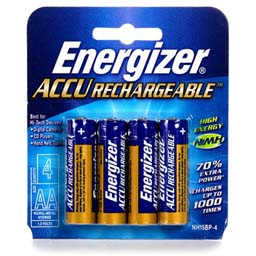
From the viewpoint of chemistry, an ideal material for the cathode would be hydrogen. But under normal conditions of use for this is impossible. At room temperature and atmospheric pressure, it is a gas, and it's easier to use for filling balloons, rather than as material for batteries. However, in the late 60th century, the 20 scientists have discovered a number of alloys capable of binding the atomic hydrogen in a volume 1000 times greater than their own. They are called hydrides, a chemical compound, they are typically metals such as zinc, lithium and nickel. With proper use, with the help of the hydrides can store enough hydrogen to be used in reversible reactions inside a battery. The most widely used Nickel-Metal Hydride (NiMH) batteries, which have hydride cathode and a nickel anode. The use of hydrides has several advantages. The most obvious is that the production does not use toxic cadmium. The absence of this material also means that these batteries should be free from memory effect. In addition, through the use of hydrogen as a cathode, managed to finish 50-percent increase in specific capacity (compared to nickel-cadmium batteries). In practice, this means that the nickel-metal hydride batteries, the player or similar device will run on 50% longer. But the use of hydrogen brings not only positive but also negative results. The main drawback is that these batteries are significantly more prone to self-discharge. Some of them are losing up to 5% charge per day, although the latest models, this performance was reduced. Schedule of discharge of nickel-metal hydride batteries under load is slightly different from the nickel-cadmium. The rated voltage, they do not differ (all the same 1.2 V). But if the battery is fully charged, then for some time the output voltage of 1.4 V. After this short period, it drops to 1.2 V, and further NiMH-battery behave the same way as the NiCad. Both types generally have enough similar characteristics. NiMh-batteries can also produce the current of great strength, can withstand a lot of charge / discharge cycles (usually about 500), yet they are two different technologies. If, during battery discharge of the two types behave almost identically, then the charge of similarity is not observed. More specifically, the nickel-cadmium batteries while charging almost do not change its temperature. Nickel-Metal Hydride thus generate heat, and when reaching full charge, they can heat up quite significantly. Because of this, for different batteries require different chargers. And although the market there are universal devices, usually once they can charge the batteries of the same type.
The main problem in using lithium again, is its high activity. He may even break out - to say nothing, not the most pleasant feature, when it comes to batteries. Because of these problems, the elements on the basis of metallic lithium, which began to appear as early as the 70th-80th years of the 20th century, the "famous" for its low reliability. To get rid of these difficulties, manufacturers have sought to use lithium batteries in the form of ions. Thus, they managed to get all the useful electrochemical qualities, without contacting the whimsical metal form. In the lithium-ion cell, lithium ions are related molecules of other materials. Typical Li-Ion-battery has a carbon anode and cathode of litiykobaltdioksida. The electrolyte is basically a solution of lithium salts.
Lithium batteries have a higher density than nickel-metal hydride. Say, in notebooks such batteries may work in one and a half times longer than nickel-metal hydride. In addition, lithium-ion cells spared from the effects of memory, which suffered early nickel-cadmium batteries. On the other hand, the internal resistance of a modern lithium cells is higher than that of nickel-cadmium. Accordingly, they can not provide such strong currents. If Ni-Cd cells are able to melt the coin, lithium is not able to. But still, the power of these batteries would be enough for a laptop, if it is not associated with jump loads (this means that some devices such as hard drive or CD-ROM, should not cause the high jump at extreme conditions - for example, during the initial promotion or wakes up from sleep mode). Moreover, even despite the fact that lithium-ion batteries will stand for hundreds of charge cycles, they live shorter lives than those that use a nickel. Due to the fact that the lithium-ion cells using a liquid electrolyte (even if separated by a layer of tissue) in the form they are almost always the cylinder. Although this form is not worse than other forms of elements, with the advent of polymerized electrolyte lithium-ion batteries are becoming smaller.
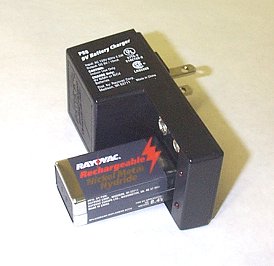
Modern devices for charging - a sophisticated electronic devices equipped with different systems of protection - both yours and your batteries. In most cases, each type of element to its own charger. When used improperly, can ruin not only batteries but also the charger. There are two modes of chargers - with constant voltage and constant current. Devices that work only with constant voltage is very simple. They have always served the same voltage, but the current strength depends on the level of charge the batteries (and other factors). With the accumulation of energy, the voltage increases and, hence, decreases the potential difference charger and battery. As a result, the current in the circuit decreases. They are arranged is not difficult, all you need - a transformer (to reduce the voltage to the desired level) and rectifier (for straightening the AC to DC). Such devices are equipped with some of the lithium-ion batteries, although they are usually added to the system of protection against over-charging and so on. The second type of charger provides a constant current strength and alters the voltage to provide the required current value. Charging stops when the battery voltage reaches a full charge. Typically, these devices are used for nickel-cadmium and nickel metal hydride elements. In order not to spoil the battery, you need time to stop charging after reaching the desired level. Depending on the type of battery and "tricked" the charger to determine the required time to recharge using multiple technologies. In the simplest cases is measured by the voltage produced by battery. The system monitors the battery voltage and terminates the chain at a time when it reaches a threshold level. But this method is not suitable for all elements. For example, it will never meet in chargers for nickel-cadmium batteries, which discharge curve is almost straight most of the time. This makes it impossible to determine the threshold voltage. More sophisticated chargers selected mode of operation, based on measuring the temperature of the element. When the battery starts to heat up, they will reduce the amperage.Usually in such batteries are built thermometers, which monitors the temperature of the element and transmit a corresponding signal charger. The most advanced devices use these two methods at once. They start with a large current, and then processing the data from the sensor voltage and temperature, can switch to low. If the battery is charged, then they go into maintenance mode charge. In this case, the battery is recharged only slightly to compensate for the process of self-discharge. Charge current in this case is only one-twentieth, one-thirtieth of the nominal discharge current batteries. But for this battery should maintain a small current charging mode (for example, nickel-cadmium batteries charged so you can not). Most chargers for laptops and cell phones are designed in such a way that can be constantly connected to the elements.
History
It is considered that the basic principles of which are used to this day, were discovered in the late XVIII century Italian physicist and naturalist, Alessandro Volta (1745-1827). It was then working at the University of Pavia, he became interested in "animal electricity", open a few years earlier by his compatriot Luigi Galvani (in his honor electrochemical batteries are often called galvanic). Volta proved that it is the current produced by the contact of two different metals, causing a decline in muscle in frog legs. He therefore rejected the idea Galvani that electricity is produced in muscles. To prove his point, he filled two cups with brine and combined them with metal edges. One end of these arcs were copper and one zinc. They were established so that each bowl was one electrode of each type. This construction and the first battery produces electricity by chemical reaction between two metals in solution. In 1800 he perfected it, creating his famous "Voltaic pile", the first DC power source. He represented the 20 pairs of dots, made of two different metals, laid pieces of leather or cloth moistened with a saline solution. In recognition of Italian scientist, his name has been named one of the voltage - volts.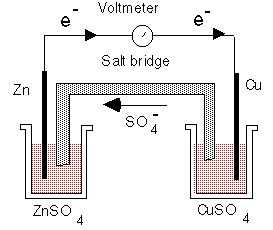 |
Types of batteries
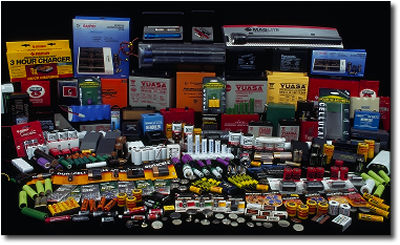 |
| Type | Voltage | Ud.emkost |
| Ni-Cad | 1,2 | 40 - 60 |
| NiMH | 1,2 | 60 - 80 |
| Li-Ion | 3,6 | 90 - 110 |
| Li-Polymer | 3,6 | 130 - 150 |
Chemical Systems
One of the most important factors in the development of batteries (as well as any device that feeds them) is to achieve maximum specific capacitance for a given (minimum) size and weight. Chemical reactions occurring inside the element and determine its capacity and physical size. In principle, the whole history of the development of batteries is reduced to finding new chemical systems and package them in a body as small as possible. Today is a lot of different types of batteries, some of which were developed in the 19th century, while others barely noted a decade. Such diversity is explained by the fact that each technology has its strengths. We will tell you about the most common of those used in mobile devices.Dry cell batteries
The first series-produced batteries were just dry. Heirs of the invention Leklanshe, they are most prevalent in the world. Only one company Energizer sells more than 6 billion such batteries annually. In general, "says the battery, we mean - dry cell." And this despite the fact that they have the lowest specific capacity of all the "massive" types. Such popularity is due, firstly, their cheapness, and secondly, that this name is called at once three different chemical systems: chlor-zinc, alkaline zinc-manganese batteries (elements Leklanshe). Their names give an indication of chemical systems, based on which they were created. In the dry cell batteries located on the axis of carbon rod cathode current collectors. Cathode itself is a system that includes manganese dioxide, carbon electrode and electrolyte. Zinc "cup" is the anode and forms a metal housing element. Electrolyte, in turn, is a mixture, which consists of ammonium chloride, manganese dioxide and zinc chloride. Manganese-zinc and chlor-zinc elements differ, in fact, the electrolyte. The former contain a mixture of ammonium chloride and zinc chloride, diluted with water. In the chlor-zinc electrolyte by nearly 100% is zinc chloride. The difference in the nominal voltage at which the minimum: 1,55 V and 1.6 V respectively. Despite the fact that the chlor-zinc has a greater capacity as compared with the elements Leklanshe, this advantage disappears at low load. Therefore, they often write "heavy-duty", ie elements with high power. Be that as it may, the effectiveness of all dry cell decreases strongly with increasing load. That is why in modern cameras to put them is not worth it, they just are not designed for this purpose. No matter how much running around pink bunnies in advertising, alkaline batteries - it's all the same carbon-zinc minerals came from the 19th century. The only difference is a specially selected blend of electrolyte, which allows to increase the capacity and shelf life of such batteries. What's the secret? This mixture is slightly more alkaline than the other two types.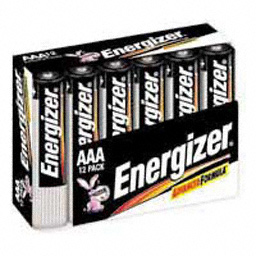 |
Nickel-cadmium batteries
Title tells us that the batteries of this type have a nickel anode and a cadmium cathode. Nickel-cadmium batteries (designated Ni-Cad) are popular among consumers around the world. Last but not least is due to the fact that they can withstand a large number of charge-discharge cycles - 500 or even 1000 - without a significant degradation in performance. In addition, they are relatively lightweight and energy-intensive (although the specific capacitance of approximately two times lower than that of alkaline batteries). On the other hand, they contain toxic cadmium, so that they should be more careful, both during use and when to dispose of.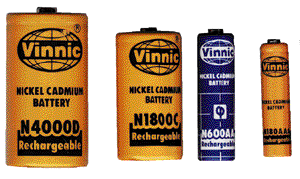 |
Preventing electrolysis
As a result of electrolysis in nickel-cadmium batteries can accumulate potentially explosive gases: hydrogen and oxygen. To prevent this, the batteries are placed in a sealed envelope. There are special microvalves designed for automatic venting of accumulated gases. They are so small that they are very difficult to notice. It is important that these valves were closed, so battery life should not wrap, glue or tape winding.Nickel-metal hydride batteries
 |
Lithium-ion batteries
Lithium is the most reactive metals, and used it in the most compact systems that provide energy-the-art wireless technology.Lithium cathodes used in almost all batteries with large capacity. But thanks to the activity of this metal batteries are obtained not only very receptive, they also have the highest rated voltage. Depending on the anode, the lithium-containing elements have an output voltage from 1,5 V to 3,6 V!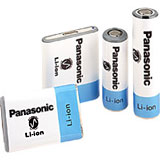 |
 |
Lithium-polymer batteries
The most advanced technology used today to create a battery that is a lithium-polymer. Already among the manufacturers as batteries, and computer devices has been a tendency for a gradual transition to this type of elements. The main advantage of lithium polymer batteries is the absence of liquid electrolyte. No, it does not mean that scientists have found a way to dispense entirely with electrolyte. The anode is separated from the cathode of a polymer barrier, composite materials such as polyacrylonitrile, which contains a lithium salt. Due to the absence of liquid components, lithium-polymer elements can take almost any shape, unlike other types of cylindrical batteries. Conventional forms of packaging for them are flat plates or bars. As such, they better fill the space the battery compartment. As a result, at the same specific density, lithium-polymer batteries optimum shape can be stored on 22% more energy than comparable lithium-ion. This is achieved by filling the "dead" volumes in the corners of the compartment, which would have remained unused in the case of cylindrical batteries. Besides these obvious advantages, lithium-polymer elements are environmentally friendly and easier due to the absence of an external metal casing.Lithium-battery zhelezodisulfidnye
Unlike other lithium-containing batteries, which have an output voltage higher than 3V, the lithium-zhelezodisulfidnyh it in half. In addition, they can not be recharged. This technology represents a compromise to which the developers have gone to ensure compatibility of lithium power sources with the technique, developed for use alkaline batteries. The chemical composition of the batteries was specially modified. They lithium anode separated from cathode zhelezodisulfidnogo layer of electrolyte. This sandwich is packed in a sealed enclosure with mikroklapanami for ventilation, as well as nickel-cadmium batteries. This type of element has been conceived as a competitor to alkaline batteries. Compared with lithium-zhelezodisulfidnye weigh a third less, have higher capacity, and, moreover, is also stored for longer. Even after ten years of storage, they retain almost all their charge. Superiority over its competitors are most pronounced at high load. In the case of high load currents lithium zhelezodisulfidnye elements can operate in 2,5 times longer than alkaline batteries of the same size. If the output does not require a high current, this difference is much less noticeable. For example, one of the producers of batteries, said the following characteristics of two types of their battery size AA: at a load of 20 mA alkaline battery will work for 122 hours vs. 135 hours in a lithium-zhelezodisulfidnoy. If the load increased up to 1A, the duration of the work amounted to 0,8 and 2,1 hours respectively. As they say, the result is obvious. These powerful batteries does not make sense to put a device that consume relatively little energy for a long time. They were specifically designed for use in cameras, powerful flashlights, and an alarm clock or radio is better to put alkaline batteries.Chargers
 |
Storage
If you want your battery served as long as possible, something about them to care for. With elements of the first kind, ie with disposable batteries, more simply, their only important thing is to store, and after using them all the same throw. Batteries, the elements of the second kind, require more attention, because they need to be regularly recharged. All batteries overheating spoil. And may even become destructive charge, if it does not stop in time. Nothing serious is that your battery to feel warm when it is connected to a charger. But for Overcharging temperature rises significantly, the battery becomes hot, and it is a sure sign that more of its charge will not succeed. Battery can also be rendered unusable if it is completely discharged. This may be caused by short circuit. Incidentally, an interesting fact: some of the battery after the discharge below the recommended level can change the polarity! In general, if your laptop is to alert you that its battery is almost fully discharged, do not try to continue the work - more will come. Most rechargeable batteries are best stored in a discharged state. This particularly applies to Ni-Cd cells. Therefore, those batteries that are long in stock, usually sold uncharged.Devices
Most of the devices involves the use of a battery of standard sizes, for example, AA, AAA, and the like. Therefore, buyers have a choice, what type of items to choose. The inscription "Heavy-duty" (high load), which can be seen on some carbon-zinc batteries is not just a publicity stunt. This means that they are intended for use in applications requiring a current of great strength. Examples of such devices - lights, electric motors and all the appliances in which they are applied, such as children's toys. There, these batteries last a lot longer than usual. If the device consumes little power, then this advantage is almost is almost unnoticeable. Different lithium-containing batteries are very different from each other in regard to the application. Li-zhelezodisulfidnye are champions at work c heavy loads. Other types, such as lithium watch batteries, used in applications where the load on the contrary, are not large. Lithium-ion and lithium polymer are somewhere in between, and therefore are the most versatile. Where can be used batteries and disposable batteries are usually preferable to first. But in some cases, their benefits are not claimed. Take, for example, remote control, which consumes very little power, but is used continuously and for a long time. Conventional batteries can last it for several years and the batteries do not live so much, in addition to such long periods of time makes itself felt far higher self-discharge rate of these elements. At the other extreme are devices that are rarely used, but must always be ready to work when needed. They are also better to put something disposable, but the "long-playing". In general, the principle is clear - do not have the best battery or battery for each application will be something good and something bad. Well, finally, we repeat some important rules:- If a metal object short circuit the battery terminals, then it starts to heat up. This can cause damage to your property, and even fire.
- Most of the batteries produces hydrogen in the process of electrolysis caused by recharging. Sealing of buildings of modern batteries significantly reduces the risk of leakage and fire of gas, but no complete assurance can not give because the built-in valves periodically release the surplus accumulated hydrogen.
- Much more dangerous is a gas which can not leave the building. If for some reason the automatic valves were blocked when the temperature inside the pressure may grow so that the battery will explode. Therefore, building batteries should never be sealed, sealed in plastic and the like.
- Almost all batteries contain hazardous chemicals: toxic, poisonous, flammable - depends on technology. It is therefore important that they be properly disposed of after use. Naturally, it is still all that is on the nearest landfill, but it is better to let them lie somewhere far away, than lying on the street.
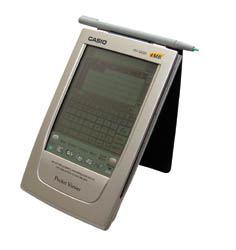
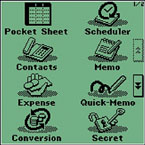
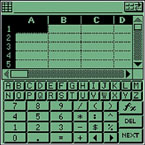
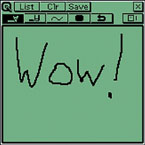
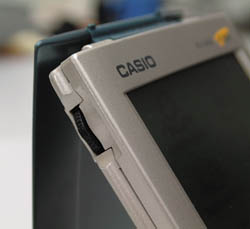
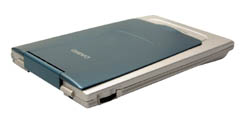
Review of Pocket PC Casio Pocket Viewer PV-450S
 |
 |
 |
 |
 |
 |
Napalm
Original article is at Kompyuferre becoming one of the first Russian winner of the Palm m100, I have not felt much inconvenience from its two megabytes of RAM, except that they had to abandon the large but tasty programs. A good dictionary or a map, as well as "War and Peace" in its entirety - all this for him. But one day, wandering through some palmolyubivomu site, I came across a forum for discussion about the upgrade. It seems that discussed the advantages and disadvantages of the two competing schools.
This story reminded me of those days when I by chance found fidoshnoy node, and not just a node, and a major hub, and with a useless modem Sportster 14400. The line was horrible, the relationship now and then vomited out the links (especially non-resident) did not have time to dig soap, debris which grew every night. On a decent modem was not enough money, but fortunately, my Sportster was apgreydabelnym, ie using the programmer easily turn into a top model Courier, put in a good USRobotics modems of different classes of almost the same stuffing. Scraped together some money and taking donations links and point, I went to the attic of some institute, where did one of apgreyderov. The whole country there were then only a few people, and they compete fiercely with each other. However, we must pay tribute, almost always in the form of censorship. If the modem simply reprogrammed the DSP, then the "Palma" upgrade is to increase memory - from two to eight megabytes. He yield, judging from the list on the site apgreydera, almost all low-end models the Palm "," Vayzorov », TRG Pro and other palmoobraznyh. Is it worth it ... if we subtract from the price of m105, which are present unknown 8 MB of memory, the price of m100, where these are only two megabytes, and just get the upgrade price is almost, well, maybe a little more. That is, if you talk to an adult, it is better to buy normal "Palm", because it saves on the upgrade is still a dime. A guarantee, of course, lost. However, I wanted adventure, especially because no assurance from the very beginning of my cars were not. And I have them (adventure) received. Night, an apartment on the outskirts of Moscow, where Max has arrived for a day or two. He comes from another city, if recruited more than twenty orders. It happens about once every couple of months. There in the capital and its apgreydery otherwise orders from Max would be great. Background.
 |
Subscribe to:
Posts (Atom)